Subscribe to our youtube channel today! @medellin_unfiltered

Algorithmic Surveillance Requires A Completely New Strategy For Living In Medellin
The Colombian government has officially deployed an advanced digital task force that utilizes algorithmic surveillance to monitor expatriate social media accounts, which frequently results in rapid visa cancellations for anyone deemed a threat to the established public order. This comprehensive analysis breaks down the new 2026 migration decrees while exploring recent high-profile deportations, and it provides the exact blueprint required to protect your residency from automated expulsion in an increasingly complex geopolitical environment.
Steve Hamilton
4/17/20263 min read
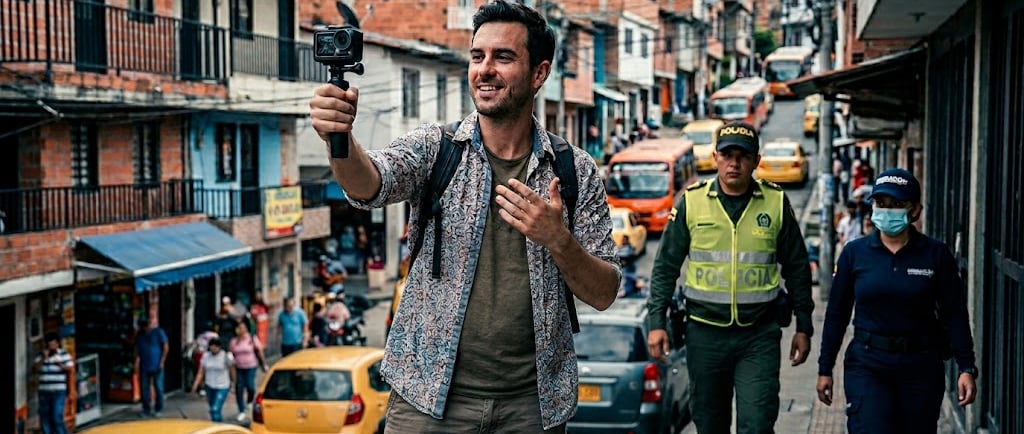
The Unfiltered Truth About Medellin 2026: Airport Interrogations, Tinder Traps, and Digital Deportations
The 2026 update to the national migration decree fundamentally shifts border control from simple passport checks to the continuous algorithmic surveillance of your digital behavior and online content.
Immigration authorities at José María Córdova airport are now pulling flagged individuals into screening rooms, demanding unlocked phones, and scrolling through personal photos to justify immediate two-year bans.
Promoting activities that actively subvert state security apparatuses or engaging in blatant exploitation provides unappealable legal grounds for a devastating ban from entering the national territory.
The tragic death of thirty-two-year-old American Airlines flight attendant Eric Gutierrez, whose body was found after a night out in El Poblado, highlights the fatal consequences of the culture gap and the absolute necessity of extreme situational awareness in Medellín.
You are entirely responsible for your own physical and digital safety, because surviving the modern Medellín landscape requires recognizing massive red flags, securing your assets, and abandoning all naive fantasies.
The golden era of the careless digital nomad casually operating without consequences in Colombia is officially a relic of the past, replaced by an unforgiving environment where the government has deliberately transitioned from standard physical surveillance to relentless algorithmic monitoring. For years, a specific segment of expatriates and tourists operated under the deeply flawed and highly arrogant assumption that what happened on the internet or what they packed in their luggage stayed completely free from real world consequences, allowing people to openly complain about the host government or carelessly film themselves in marginalized neighborhoods for cheap viral views. However, the reality of living in and visiting Medellín has fractured into two entirely distinct experiences, and the update to Colombia's national digital strategy has fundamentally changed the rules of engagement forever.
We must deeply explore the profound implications of this massive geopolitical shift, noting carefully that immigration officers at the José María Córdova airport are now legally mandated to heavily scrutinize social media handles and physical luggage in ways we have never seen before. A recent account from a foreigner who was stopped at the border serves as a terrifying wake up call for anyone treating this city like a personal playground. Flagged by the airline with the dreaded SSS designation on his ticket, his passport scan triggered a red screen at immigration, resulting in him being immediately pulled into a screening room where his suitcase had already been opened and searched. The suitcase was packed with items that clearly flagged his intentions as an exploitative tourist, and the immigration agents demanded his phone, forced him to unlock it, and literally took pictures of his screen as they scrolled through his private messages before handcuffing him and deporting him with a two year ban.
This severe tightening of the borders and absolute rejection of exploitative behavior is occurring against the backdrop of genuine tragedies that have deeply shaken the entire expatriate community. The recent death of Eric Gutierrez, a thirty two year old American Airlines flight attendant who went missing after a night out in the popular El Poblado neighborhood and was found dead days later, stands as a horrific reminder of the stakes involved. While local authorities and the mayor's office have assured the public that they are silently but aggressively investigating this case, it highlights an undeniable reality that the culture gap in Medellín is massive and your kindness can incredibly easily be perceived as weakness by sophisticated criminal networks.
It is absolutely crucial to understand that we cannot rely entirely on the authorities to save us from situations that are frequently preventable, because the stark reality is that nobody is coming to save you if you refuse to protect yourself. Consider the incredibly common scenario of a foreigner inviting two women from a dating application back to a walk up rental property, completely ignoring every obvious red flag because his ego convinces him they are genuinely interested in him rather than his physical assets. When he wakes up ten hours later completely drugged and stripped of his passport, laptop, and money, the police are left with a cold trail and deleted accounts that provide absolutely no actionable intelligence. While absolutely nobody deserves to be drugged and robbed under any circumstances, we must honestly acknowledge the extreme fatigue of a city forced to deal with tourists who do absolutely nothing to prevent their own victimization.
The concept of not giving papaya is not victim blaming, but rather the fundamental law of survival in a complex urban environment that has changed drastically since the post pandemic tourism boom. Before the recent influx of tourists, the city operated with a different set of unwritten rules, but today, operating with a blatant disregard for personal safety or cultural respect will result in catastrophic consequences. If you want to survive and thrive in this rapidly evolving city, you must abandon the fantasies sold to you by online gurus, secure your physical environment, and aggressively audit your digital footprint. Protect yourself and respect the culture that hosts you, recognizing that living in Colombia today requires profound situational awareness and an uncompromising dedication to personal responsibility.

Medellin Unfiltered
Discover the real Medellin, without filters.
CONTACT US
info@medellinunfiltered.com
© 2024 GWM Ventures. All rights reserved.
LEGAL