Subscribe to our youtube channel today! @medellin_unfiltered

How Do Foreigners Pay in Colombia Without a Colombian Bank Account? WanderWallet Is the Answer.
If you have spent five minutes in Medellín with a foreign card, you already know the problem: declined transactions, brutal ATM fees, and a local payment system that was never built with you in mind. WanderWallet just went live in Colombia on Bre-B this week, and for the first time you can pay like a local at any Bre-B merchant without a Colombian bank account, a cédula, or a single peso lost to conversion fees, and signing up through the link below puts $5 in your account after your first five transactions.
FEATUREBUSINESSTECHNOLOGYTRAVELSAFETYEXPATS
Steve Hamilton
6/22/20265 min read
WanderWallet Is Now Live in Colombia: How to Pay Like a Local Without a Colombian Bank Account
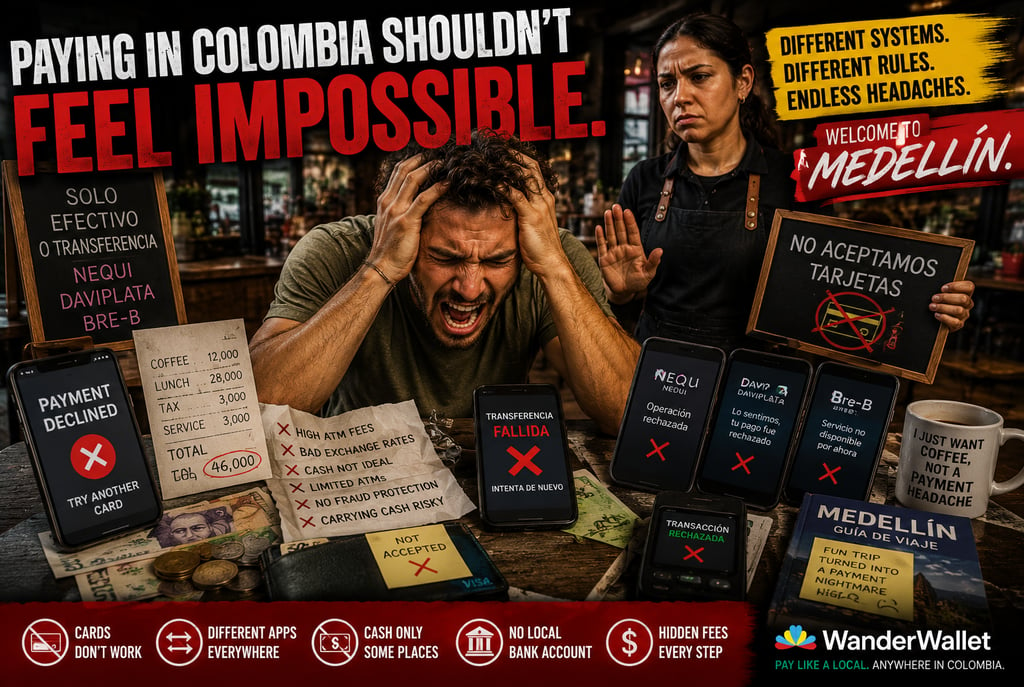
If you've spent any real time in Medellín, you know the payment problem. You're standing at a neighborhood restaurant in Laureles, the bill comes, and the card reader either spits your foreign Visa back at you or hits you with a conversion fee that would make your bank wince. The cashier shrugs. You pull out cash you got from a Bancolombia ATM that charged you 12,000 pesos just to dispense it, on top of whatever your home bank took on the back end. You smiled through it because that's what foreigners do in Colombia. You absorb the friction and move on.
That friction just got a solution. WanderWallet, the fintech app built specifically for foreigners navigating Latin American payment systems, went live in Colombia this week on Bre-B, Colombia's new national instant payment infrastructure. I sat down with Vojta, WanderWallet's founder, to break the story before anyone else had it. What he told me changes the financial reality for every tourist, expat, and digital nomad coming through this city.
What Bre-B Actually Is, and Why It Matters for Foreigners
Bre-B is Colombia's central bank-backed instant payment system, launched in October 2025 and modeled closely on Brazil's Pix. By April 2026, more than 34 million Colombians had registered on the platform and it had processed over 638 million transactions. Colombia's central bank, the Banco de la República, built Bre-B to unify a fragmented payments landscape where Nequi, Daviplata, Transfiya, and a dozen other wallets all existed but couldn't reliably talk to each other. Bre-B connects all of them under one interoperable rail, and payments settle in under 20 seconds, 24 hours a day.
The problem for foreigners has always been that Bre-B, like Nequi and Daviplata before it, requires a Colombian account to use. To open a Bancolombia account you need a cédula de extranjería. To get a cédula you need a visa. By the time you've worked through that paperwork, you've already paid three months of ATM fees and had your card declined at a corner store, a parking lot, and probably a cinema ticket website. Vojta actually used that last example when we talked. He couldn't buy a movie ticket online in Colombia because the ticketing system doesn't accept foreign credit cards. It's either a Colombian card or a local payment method, full stop.
WanderWallet's answer is to sit between your foreign dollars and Colombia's local payment rails. You fund the app from your bank account or Revolut in USD or EUR, and from that point forward you pay exactly the way Colombians do: enter a Bre-B key and you're done. The merchant receives Colombian pesos. You never touch an ATM. You never deal with a declined card. The app shows you the exact conversion and any applicable fee before you confirm, so there are no surprises buried in your statement two days later.
The Before-and-After of Paying in Medellín
Before WanderWallet Colombia support: you land at El Dorado or José María Córdova, get hit immediately by an airport exchange booth taking 6-8% off your dollars, then spend your first week finding ATMs that accept your card, staying under withdrawal limits of around 600,000 to 1,000,000 pesos per transaction, paying 12,000 to 24,000 pesos in ATM fees per withdrawal on top of whatever your home bank charges. You carry cash everywhere because half the places you actually want to eat and drink in Medellín don't take foreign cards and never did. The local joints, the corner tiendas, the neighborhood spots that make this city what it is: cash or Nequi, take it or leave it. If you're staying longer than two weeks and want a Nequi account, you need a cédula, and if you don't have one yet, you're stuck.
After WanderWallet: you download the app before you board the plane, verify your identity with your passport and a selfie, fund your wallet from your existing bank account, and by the time your taxi drops you in El Poblado you can pay the driver by paying with a Bre-B key. The landlord who wants rent paid via local transfer? Handled. The parking garage, the pharmacy, the fruit vendor Bre-B sticker taped to their cart, all of it accessible without a Colombian bank account or a single visit to a branch.
Who This Actually Solves the Problem For
Tourists who are here for a week or two get the most immediate relief. The Colombian banking system was never designed to onboard someone who lands on a Tuesday and leaves on a Sunday. You have zero leverage to negotiate the ATM fee structure, zero access to Nequi without a cédula, and zero recourse when a card gets declined at a restaurant. WanderWallet removes all three of those walls in about ten minutes of setup time.
Expats in the first few months of a relocation hit this problem in a different way. You might have a visa but your cédula appointment is still three weeks out. You know Nequi is the answer but you can't open it yet. WanderWallet fills that gap cleanly. It is not a replacement for eventually having a Colombian bank account, but it means you are not bleeding fees while you wait for the paperwork to clear.
Digital nomads are probably the sharpest fit because WanderWallet was built for exactly this use case. It already supports Brazil, Argentina, and Bolivia, which means if your year involves a rotation through Medellín, Buenos Aires, and São Paulo, you carry one app and one balance across the whole circuit. You stop thinking about which payment method works in which country. You scan, you pay, you move.
A Few Things Worth Knowing Before You Download
WanderWallet is non-custodial, meaning the app cannot move your funds without you confirming each transaction in the app. Your balance stays in your wallet. The company shows you the exact fee and conversion before you approve anything, and that commitment to transparency is one of the things that makes it worth recommending to your audience.
Verification requires a passport or ID and a selfie check, which you can complete in the app. It's the same KYC process any legitimate fintech runs, and it typically resolves quickly. Funding works via bank transfer in USD or EUR, or directly from Revolut if that's your primary account. That covers most of the European and North American nomad crowd that moves through Medellín.
Colombia is the newest market. The integration with Bre-B is live as of this week, and as with any fresh launch there may be edge cases that get ironed out over the coming weeks. I'm going to keep testing it on the ground here and report back if anything changes. That's what Medellín Unfiltered is for.
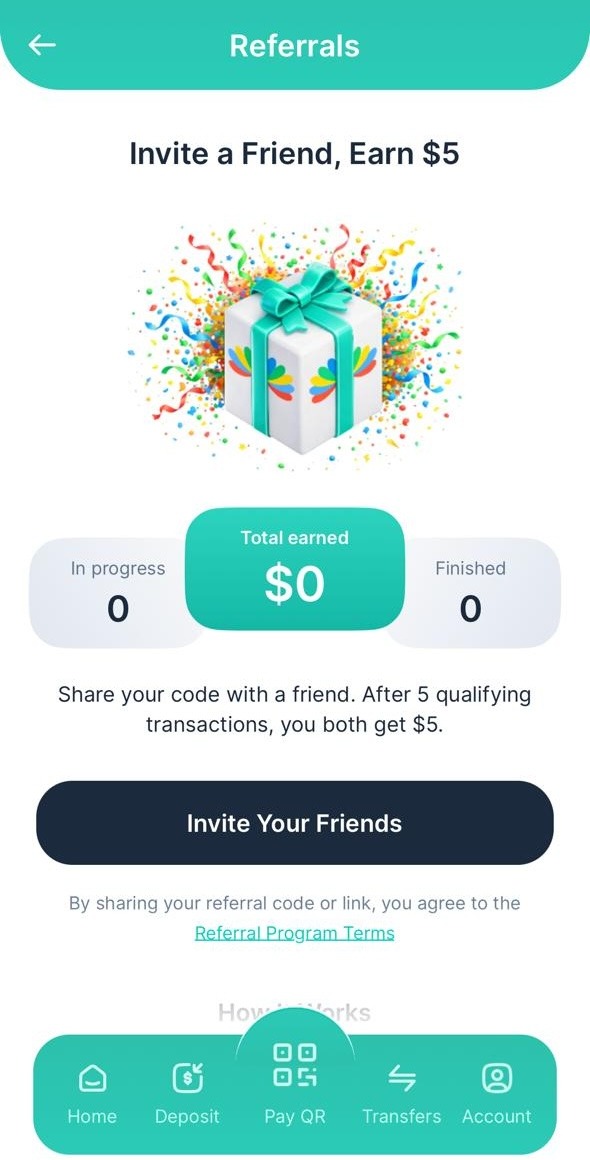
Sign up through the Medellín Unfiltered referral link below and WanderWallet puts $5 in your account after your first five transactions. Five payments: a coffee, a taxi, a lunch, a pharmacy run, a Bre-B Terminal at the corner store and five bucks lands in your wallet. You get $5, I get a small cut for sending you their way, and you're already set up to pay like a local before you've been here 24 hours. There is no reason not to do this before you board the plane.
🔗 Get WanderWallet + claim your $5: https://activate.wanderwallet.io/medellinunfiltered
Have questions about paying in Medellín or Colombia more broadly? Find me on the socials below. I answer.

Medellin Unfiltered
Discover the real Medellin, without filters.
CONTACT US
info@medellinunfiltered.com
© 2024 GWM Ventures. All rights reserved.
LEGAL