Subscribe to our youtube channel today! @medellin_unfiltered

If You Hire a Maid in Colombia, Read This Before Year End
If you employ a maid, cleaner, or nanny in Colombia, year-end liquidación payments are not optional. This guide explains how the system works, why foreigners get confused, and how to protect yourself legally without panic.
EXPATSSERVICES
Steve Hamilton
12/23/20253 min read
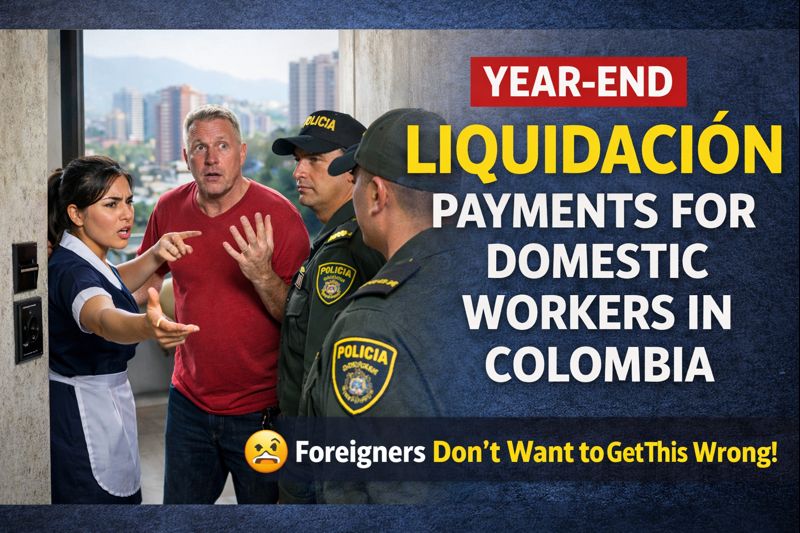

Year-End Liquidación Payments for Domestic Workers in Colombia Explained for Expats
You owe liquidación in Colombia even for part-time domestic workers 😬
Cash payments and verbal agreements do not remove the obligation 💸
December is when most expats get caught off guard 📅
Ignoring this creates more risk than paying correctly ⚠️
When in doubt, a Colombian labor attorney is your safest move 📞
If you employ a maid, cleaner, nanny, driver, or gardener in Colombia, there is a moment that sneaks up on a lot of foreigners every December, usually right after someone casually mentions “liquidación” and the room goes quiet.
Most expats don’t avoid this topic because they’re trying to cut corners. They avoid it because the rules feel unclear, the information online is messy, and nobody wants to accidentally open a legal can of worms in a country they’re still learning to navigate.
Unfortunately, liquidación is one of those things where ignoring it feels easier in the short term but creates far more stress down the road.
In Colombia, domestic workers are protected by labor law in a way that surprises many foreigners, especially those coming from places where household help is treated as informal or purely private. Here, if someone works in your home on a recurring basis and you pay them, the law generally sees you as an employer, even if they only come one day a week, even if you pay in cash, and even if there is no written contract.
That framework is overseen by Ministerio del Trabajo, and the system is intentionally designed to protect workers first.
Liquidación itself is not a bonus, a favor, or a goodwill gesture. It is a legally defined settlement that reflects benefits accrued over time, and it usually comes into focus at the end of the year or when an employment relationship ends. It bundles together several components that represent severance savings, interest on those savings, a statutory bonus element, and vacation time owed based on how long the person worked.
This is where many foreigners start to feel uneasy, because the relationship with their domestic worker often feels personal and informal, and suddenly they are being told it is also legal and structured. That disconnect creates anxiety, especially when people worry about overpaying, underpaying, or accidentally doing something that triggers a bigger problem.
What’s important to understand is that the real risk here is not paying liquidación incorrectly. The real risk is pretending it does not exist.
Colombia does not operate on the assumption that an inspector will knock on your door to check compliance. Labor issues typically surface when a worker files a claim, sometimes long after the employment relationship has ended. Verbal agreements still count, cash payments still count, and good intentions do not erase obligations once a dispute is in motion.
Another layer foreigners often miss is cultural. Many domestic workers will not directly ask about liquidación, even when they know it exists and expect it. Silence is not confirmation that everything is fine. In many cases, it is simply politeness or discomfort with confrontation. When payments are handled clearly and on time, it tends to strengthen trust. When they are ignored, resentment builds quietly and can surface later in ways that catch people off guard.
Liquidación is typically paid in December as a year-end settlement, or at the moment employment ends, and from a Colombian perspective this is routine, not controversial. It only feels dramatic when someone is encountering it for the first time without context.
If you are unsure how this applies to your situation, the worst move is guessing or relying on crowdsourced advice from social media threads where half the answers contradict each other. Colombian labor law is specific, and mistakes can snowball quickly, especially when foreign residency, language barriers, and unfamiliar systems are involved.
The smartest and calmest approach, particularly if you have questions about amounts, timelines, or prior years, is to speak directly with a Colombian labor attorney or accountant who regularly works with expats. That conversation gives you clarity, protects you legally, and removes the low-grade stress that comes from not knowing whether you are exposed.
At the end of the day, handling liquidación correctly is not about pressure or guilt. It is about understanding the rules of the country you chose to live in, maintaining clean working relationships, and avoiding problems that are completely preventable once you understand how the system works. Once you do, liquidación stops being scary and simply becomes another part of living responsibly in Colombia.

Medellin Unfiltered
Discover the real Medellin, without filters.
CONTACT US
info@medellinunfiltered.com
© 2024 GWM Ventures. All rights reserved.
LEGAL