Subscribe to our youtube channel today! @medellin_unfiltered

The Court Hit Pause on Petro’s Wage Decree. Here’s Why That Can Help Workers
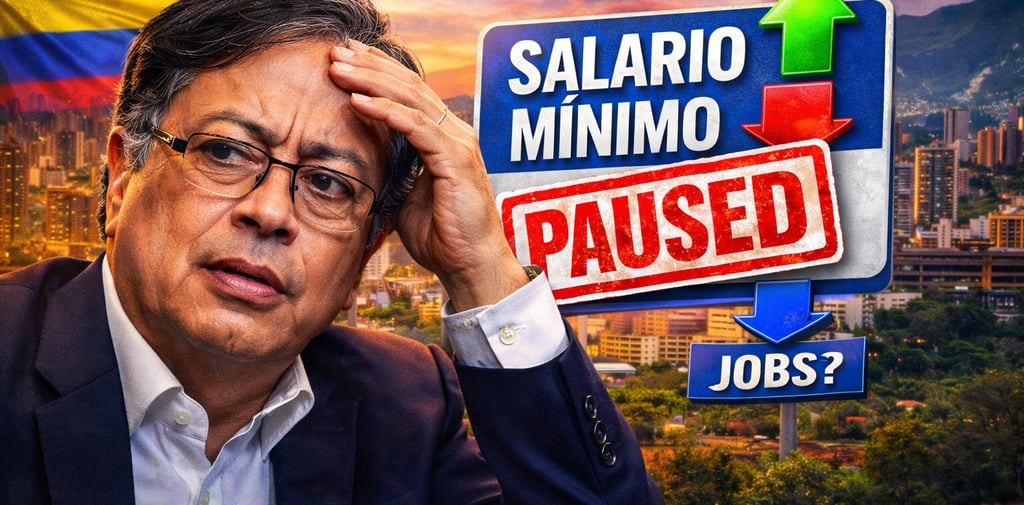
Colombia’s court just paused the 2026 minimum wage decree, and the headlines make it sound like workers instantly lost. The real story is how this court step can reduce price spikes, protect hiring, and calm Medellín’s day-to-day cost of living if the recalculation forces transparent math.
BUSINESS
Steve Hamilton
2/13/20263 min read
Colombia’s Minimum Wage Increase Got Suspended. Here’s Why That Could Cool Prices in Medellín.
🧾 The court ordered a new transitory wage decree in 8 days, and the current wage stays in place until that gets published.
📈 Fast wage jumps can push service prices up quickly, especially in restaurants and everyday Medellín services.
🔥 Colombia ended 2025 at 5.10% inflation, and BanRep expects inflation pressure in 2026, so uncertainty can turn into “panic pricing.”
🧠 A forced, transparent recalculation can reduce chaos and lower the risk of a messy reversal later.
🌎 Residents feel this through rent, services, and hiring costs, so budgeting and buffers matter more than hot takes.
If you live in Medellín, you already know how fast a national economic headline turns into a neighborhood-level price conversation, because it never stays in Bogotá, it lands in your daily spending in Laureles, Envigado, and El Poblado almost immediately, especially when the story touches wages, services, and the cost of doing business.
On February 13, 2026, Colombia’s Consejo de Estado issued a provisional suspension of the decree behind the roughly 23% minimum wage increase for 2026, and it ordered the government to publish a new transitory decree within eight days that recalculates the increase using the legally required criteria. The fastest reaction online was predictable, because it sounds like workers just got completely screwed over and if you stop reading there, you can build a whole angry narrative in thirty seconds, which social media has done at an alarming rate
But we have to look one step deeper, because workers do not just lose when wages rise slowly, they also lose when wage policy triggers price spikes, hiring freezes, and more informal work that strips people of stability. The court order matters because it aims to reduce the kind of uncertainty that pushes businesses to raise prices early, “just in case,” which is the pricing behavior that hits low-income households the hardest while also making life more expensive for everyone else, including expats on fixed income, remote workers on a budget, and small local employers trying to keep staff.
The decree set SMLMV (Salario Mínimo Legal Mensual Vigente) at COP $1,750,905 and a transport/connectivity allowance at COP $249,095, and that “two million peso” number is exactly why the topic feels so personal, because you can translate it into real purchases quickly. The court also structured the decision to avoid instant payroll chaos, because it says the effects of the suspension only become effective once the new transitory decree is published, which means the current wage stays in place until that happens.
Now connect that to inflation, because inflation is the silent villain in this story. Colombia ended December 2025 at 5.10% annual inflation and BanRep’s January 2026 report says inflation stopped falling in 2025 and expects pressure in 2026 before easing later, with higher labor costs in 2026 as part of the picture. That report is a HUGE reason why this suspension happened, it appears. When inflation sits above target and confidence feels shaky, a big wage decision can push costs through services first, and Medellín is a services-heavy city in the day to day life that Colombians and foreigners alike experience, which is why you notice it in restaurant bills, gym memberships, haircuts, building staff costs, delivery fees, and home services before you ever feel it in some national index.
This is where “good thing that looks bad” becomes real. If the government recalculates with transparent criteria and publishes the reasoning, it reduces uncertainty, and you reduce the incentive for businesses to price in fear, which helps control inflation behavior in the streets, not just in spreadsheets. I'm not sure if you've seen it, but prices all around Medellin have jumped at a noticeable rate in January alone. That does not mean workers should accept less, and it does not mean employers should celebrate, because Colombia’s inequality and spiking living costs are real (especially in Medellin), but it does mean the process needs to be credible so the outcome does not backfire on the exact people it aims to protect. Essentially the president's heart is in the right place, but his execution was piss poor.

Medellin Unfiltered
Discover the real Medellin, without filters.
CONTACT US
info@medellinunfiltered.com
© 2024 GWM Ventures. All rights reserved.
LEGAL