Subscribe to our youtube channel today! @medellin_unfiltered

What Happens When Nightlife Culture Collides With Rising Tourist Crime in Medellín
Tourist safety in Medellín has become a serious topic following the death of American Airlines flight attendant Eric Gutierrez Molina, and with major events like Electric Daisy Carnival approaching, visitors and city leaders alike are facing questions that can no longer be brushed aside. This deep dive explores real risks, cultural disconnects, and what travelers must understand before stepping into Medellín nightlife.
PARTYINGEVENTSCULTURE
Steve Hamilton
3/29/20266 min read
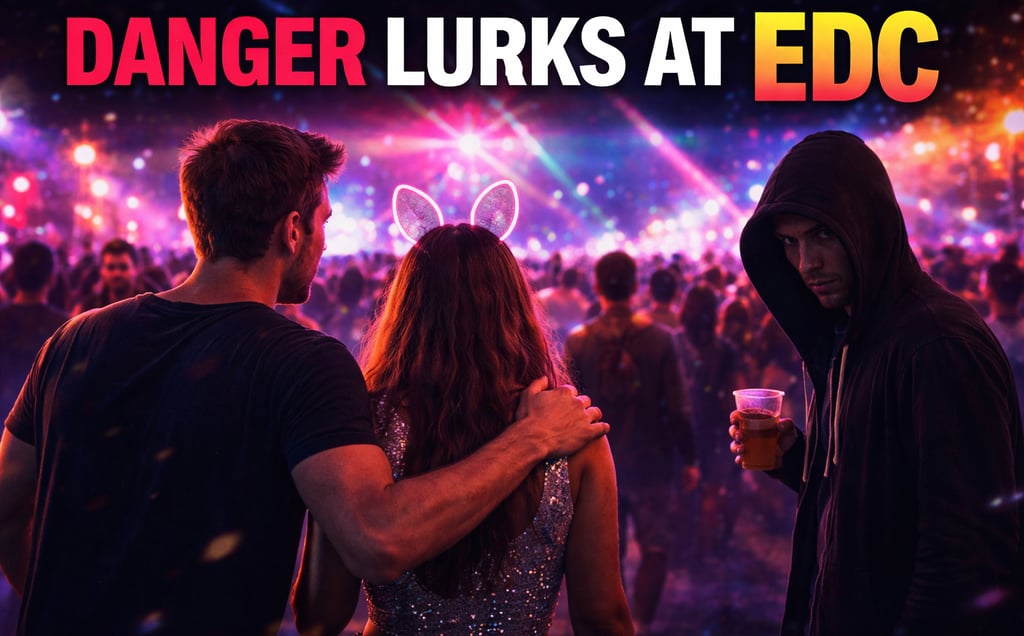

What Eric Gutierrez’s Death Reveals About Tourist Safety in Medellín Before EDC Arrives
Tourist-targeted robberies are rising, especially in nightlife-heavy areas where visibility makes visitors easier targets.
Major events like EDC bring new risks, because large crowds and nightlife conditions create opportunities for criminals.
Most visitors still have safe trips, but risk increases sharply when awareness drops.
Personal awareness matters as much as policing, especially in unfamiliar environments.
International perception of Medellín is shifting, and how the city responds now will shape its future reputation.
For the last three years, I’ve attended Festival Estéreo Picnic in Bogotá with a press pass, and every time I’ve walked away reminded that Medellín still carries a reputation far larger than its geography, because when global artists hear where you live their reactions tell you exactly how the world sees your city, and those reactions have stayed with me long after the music stopped.
In 2024, I spoke with Travis Barker from Blink‑182, and when Medellín came up in conversation he didn’t hesitate, saying they had wanted to perform there because of its transformation and history, adding that he had visited before for medical reasons and called the city paradise, which coming from one of the most recognizable figures in rock music felt like the kind of praise cities dream about earning.
In 2025, the conversation that stuck with me most came from Olivia Rodrigo, who spoke about the influence of Karol G and how artists from Medellín had shaped global music trends, saying that performing there would be something she would love to do, especially alongside someone like Karol G who speaks so passionately about her home city, which again reinforced that Medellín is not invisible on the world stage, but admired.
Then came 2026, when I had a chance to briefly meet Skrillex and Sabrina Carpenter, and while both were gracious and generous with their time, one short response shifted my perspective in a way I did not expect, because after asking the same question I had asked others about performing in Medellín, Sabrina paused and asked, almost cautiously, whether it was dangerous there, and that moment stayed with me longer than any autograph ever could.
At the time, that reaction caught me off guard, because it felt out of step with the admiration I had heard in previous years, yet in hindsight it feels less surprising when placed beside the news that followed only days later, when the disappearance and confirmed death of American Airlines flight attendant Eric Fernando Gutierrez Molina during a layover in El Poblado became international news and forced a conversation that many locals had already been having quietly for months.
Eric’s death is not an abstract statistic or a social media headline to scroll past, because it represents the exact scenario that many people who live here have warned about repeatedly, where nightlife decisions, unfamiliar surroundings, and opportunistic criminals intersect at exactly the wrong moment, leaving families in another country grieving while investigators attempt to reconstruct what happened.
If you spend enough time here, especially if you pay attention to patterns rather than isolated headlines, you begin to notice that reports of drugging and robbery incidents targeting foreign men have steadily increased since mid-2025, not at levels that justify panic but at levels that demand attention, because according to regional reporting and law enforcement data, personal robberies have concentrated heavily in nightlife-heavy zones such as El Poblado and Laureles, areas that also host the largest number of short-term visitors.
That reality creates a difficult conversation, because many Colombians feel unfairly blamed for crimes they did not commit, while many tourists arrive believing they should be able to behave exactly as they would in their home cities without adjusting for local risk dynamics, and when those two viewpoints collide the result is usually frustration rather than progress.
I have heard both sides of that frustration in person, including conversations where locals insist that foreign visitors invite trouble through reckless behavior, repeating the phrase No Dar Papaya as a reminder not to create opportunities for criminals, while visitors argue that they should be free to display wealth or pursue nightlife without fear, believing responsibility should rest solely on criminals rather than personal awareness.
Neither of those positions survives contact with reality, because while everyone deserves to move through a city without fear of violence, it is equally true that risk increases dramatically when people make themselves visible targets, especially in environments where attention itself becomes currency for criminals scanning crowds for opportunity.
This cultural disconnect becomes especially clear when examining how many young foreign men approach nightlife in Medellín, arriving with the expectation that visibility equals status, wearing expensive clothing, jewelry, or watches in an attempt to project success, because in their home environments that display often signals value or confidence, yet in Medellín that same visibility often signals vulnerability.
The problem is not that Medellín is uniquely dangerous, because by many long-term metrics the city has made extraordinary progress, recording some of the lowest homicide rates in decades, but targeted crimes against distracted or intoxicated visitors remain a persistent challenge, particularly when alcohol, unfamiliar surroundings, and strangers combine into situations where awareness drops faster than risk.
This is why large-scale events matter so much in this conversation, because festivals attract thousands of visitors who arrive in celebration mode rather than survival mode, and the upcoming arrival of Electric Daisy Carnival Medellín has the potential to test the city’s readiness in ways previous events have not.
If you have ever attended an electronic music festival, especially one headlined by artists like Skrillex, you already understand the environment these gatherings create, where long hours, crowded spaces, and recreational substances combine into conditions where judgment becomes inconsistent and situational awareness fades, leaving individuals more vulnerable than they realize.
The comparison with Bogotá’s hosting of Festival Estéreo Picnic raises a valid question, because that city welcomed tens of thousands of visitors over multiple days with relatively fewer widely reported incidents than what some neighborhoods in Medellín experience on an average weekend, suggesting that event security planning, coordination, and policing strategies can make measurable differences.
That is why this conversation cannot stop at personal responsibility alone, because while visitors must learn to move carefully and understand local risks, city leadership also carries responsibility for creating conditions where large gatherings do not become hunting grounds for opportunistic criminals, especially when international attention is already focused on recent tragedies.
Eric’s death should not be reduced to a cautionary tale about individual behavior alone, because it also reflects systemic vulnerabilities that demand attention from institutions responsible for public safety, tourism oversight, and event management, particularly at a moment when Medellín is positioning itself as a destination for increasingly ambitious global events.
There is another uncomfortable layer to this conversation that deserves acknowledgment, because in the aftermath of Eric’s death, online reactions from a minority of voices celebrated the tragedy rather than condemning it, reflecting a level of hostility that undermines the image of hospitality that Medellín has worked decades to rebuild, and reactions like those damage reputations far beyond local audiences.
Despite all of this, perspective still matters, because millions of visitors travel to Medellín every year without experiencing violence, enjoying food, music, culture, and friendships that become lifelong memories, which means the city is not defined by crime but by how effectively it responds when warning signs appear.
Personal accountability remains part of that response, because travelers who seek risky encounters, invite strangers into private spaces, or rely on intoxication to guide their decisions dramatically increase their exposure to harm, and ignoring those realities does not make them disappear, it simply makes consequences more likely.
At the same time, institutional accountability must move forward with equal urgency, because cities that welcome international tourism must invest proportionally in policing strategies, surveillance infrastructure, and coordinated event planning that protects visitors without compromising the freedom that makes festivals enjoyable in the first place.
The arrival of Electric Daisy Carnival (EDC) will place Medellín under a brighter international spotlight than many previous events, and with that spotlight comes an opportunity to demonstrate that lessons have been learned, systems have been strengthened, and visitor safety is not treated as an afterthought.
Eric Fernando Gutierrez Molina should not be remembered solely as a victim of circumstance, because his story has already become a turning point in how people discuss safety in Medellín, forcing conversations that many preferred to avoid, and reminding everyone that reputation is built not just on beauty or culture but on trust.
If there is a single takeaway from the past year, it is that safety is not created by slogans, hashtags, or optimistic messaging, but by consistent action from both individuals and institutions, each recognizing that awareness, preparation, and responsibility are not limitations on freedom but the foundation that makes freedom sustainable.
For those planning to visit Medellín in the months ahead, especially with major festivals approaching, the message should not be fear, but preparation, because cities evolve, risks shift, and awareness remains the difference between an unforgettable trip and an avoidable tragedy.
And for those responsible for guiding Medellín into its next chapter as an international destination, this moment carries an unmistakable challenge, because reputation once lost takes years to rebuild, and the decisions made today will determine how the world speaks about this city tomorrow.
Medellin Unfiltered
Discover the real Medellin, without filters.
CONTACT US
info@medellinunfiltered.com
© 2024 GWM Ventures. All rights reserved.
LEGAL